Baccarat One-Sided Strategy: Why Choosing One Side Can Bring Order to a Baccarat Shoe
Stephen Tabone explains why one-sided baccarat strategy depends on clear Banker and Player decisions, disciplined shoe selection, bankroll control and emotional restraint — not chasing every pattern.

Written by Stephen Tabone for Global Casino Games. Last reviewed: 17 June 2026.
Why One-Sided Baccarat Strategy Deserves Serious Attention
Baccarat looks simple from the outside. A bettor usually has two main betting choices: Banker side or Player side. The cards are dealt, one side wins, and the next hand begins. That simplicity is one of the reasons baccarat has become such a popular casino table game.
Yet anyone who has watched a live shoe develop knows the game does not feel simple when real money, repeated decisions and changing outcomes are involved. The scoreboard starts to build. Banker wins. Player side responds. A short streak appears, then breaks. A zigzag forms, then disappears. Suddenly, the apparently simple choice between two sides becomes a psychological test.
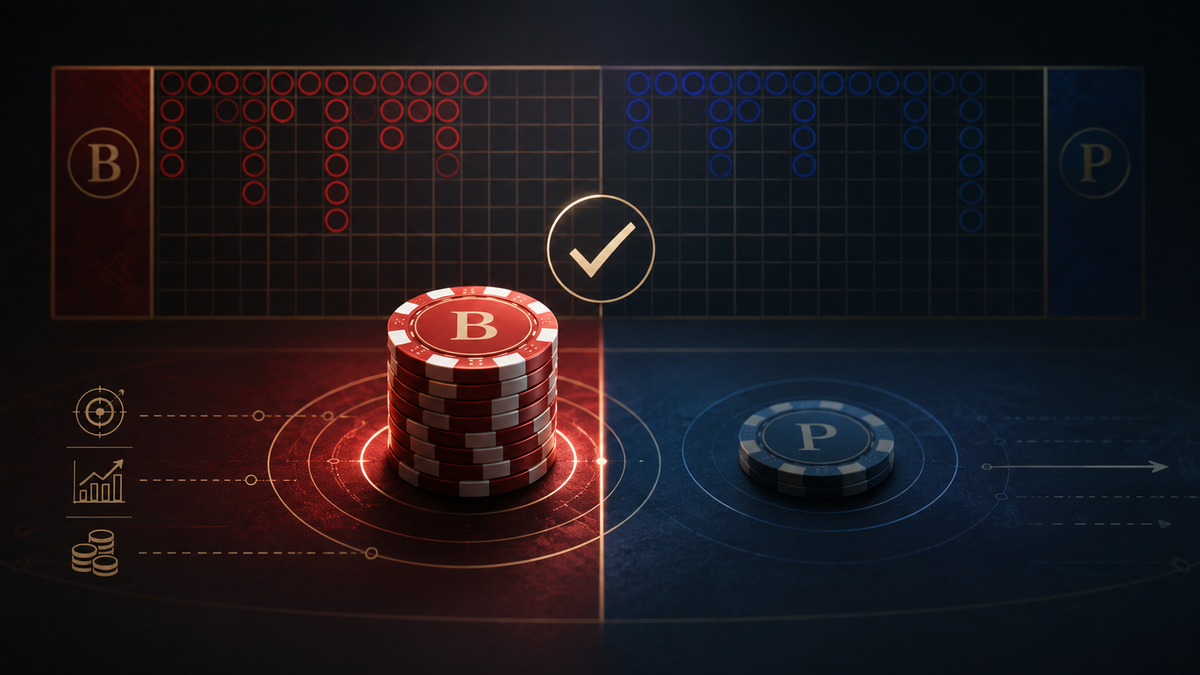
That is where one-sided baccarat thinking becomes interesting. Instead of jumping between Banker side and Player side every time a new pattern seems to appear, a one-sided approach asks a different question: can a bettor reduce confusion by concentrating on one side of the shoe and managing the session with discipline?
That is the public idea behind The Baccarat One-Sided Strategy (The BOSS). The full method belongs in the book, not in this article. But the broader thinking behind it is worth discussing because it touches the biggest problems baccarat bettors face: side selection, emotional betting, stop-loss control, bankroll pressure and knowing when to leave a shoe alone.
I wrote this book because I felt there was a gap between the way baccarat is often explained and the way it actually feels when someone is sitting in front of a live shoe. Too much baccarat advice reduces the game to slogans, especially “bet Banker”, without dealing with the pressure of repeated decisions. I wanted to write something more practical, based on the real problems bettors face once the shoe begins to move.
Why Banker Versus Player Is Not as Simple as It Looks
Many baccarat articles tell readers to bet Banker because Banker has the lowest house edge. That advice is not completely wrong, but it is often too shallow.
Yes, Banker side has a mathematical advantage over Player side because of the drawing rules. But baccarat casinos know that. That is why Banker wins are usually subject to commission or adjusted payout rules. The house edge is not removed merely because a bettor chooses Banker more often.
The mechanics behind that advantage are explained in my baccarat third-card rules guide, including the fixed Player and Banker drawing tableau and why Banker acts with more information.
The bigger problem is that long-term averages do not always help inside a single shoe. Over many shoes, Banker may have a slight statistical advantage. Inside one live shoe, however, Player side can dominate early, Banker side can struggle, or both sides can fight back and forth with no clean rhythm.
That is why “always bet Banker” can become lazy advice. It removes thought, but it does not remove risk. It also does not solve the real session question: what should a bettor do when the scoreboard in front of him is not behaving like the long-term average?
In my view, baccarat strategy should not be reduced to one slogan. The better question is how to read the situation without becoming trapped by every small movement.
Why Constantly Switching Sides Can Damage a Baccarat Session
One of the biggest mistakes I see in baccarat thinking is the urge to switch sides too quickly.
A bettor sees Banker win twice and moves to Banker side. Then Player side wins, so the bettor changes direction. Then a chop pattern appears, so the bettor starts betting against the previous outcome. Then a streak appears, so he changes again. Before long, he is no longer following a strategy. He is reacting.
This is one of the reasons I had to write the book in the first place. I had seen how easily a bettor can start with a plan, then abandon it after a few uncomfortable outcomes. Baccarat does that to people. It tempts them to reinterpret the shoe after every hand. A one-sided structure is partly about removing that temptation before emotion takes over.
That matters because baccarat can punish emotional switching. Not because the game has a memory in a magical sense, but because the bettor loses structure. Every new hand becomes an excuse to reinterpret the whole shoe.
A one-sided strategy does not mean every shoe becomes easy. It means the bettor is trying to remove one layer of confusion. Instead of asking “which side should I jump to now?” after every result, the bettor works from a more fixed decision framework.
That framework has to include risk control. Without risk control, any side-selection method can turn into chasing. The side is only one part of the decision. The rest is when to bet, when not to bet, how much to risk, how to treat losing phases, and when to stop.
Baccarat Shoes Are Not Just Patterns — They Are Pressure Tests
Baccarat scoreboards can be seductive. The Big Road, bead plate and derived roads can make a shoe look as though it is speaking to the person watching it. Sometimes the message looks clear. Other times it changes as soon as money goes down.
That is why I do not believe baccarat should be understood only as a pattern game. Patterns matter, but pressure matters more. A bettor can read a pattern correctly and still manage the session badly. A bettor can win early and still give it back. A bettor can lose three hands and suddenly abandon the system that was supposed to protect him.
The real battlefield is often not Banker side versus Player side. It is the bettor versus his own reactions.
A strong baccarat strategy should therefore reduce decision noise. It should make it harder for someone betting to improvise after every loss. It should create conditions where the bettor knows what kind of shoe he is prepared to play, what kind of risk he is prepared to tolerate, and when the shoe no longer deserves attention.
This is where one-sided baccarat thinking becomes more than a betting preference. It becomes a discipline structure.
Why Every Baccarat Hand Should Not Become a Fresh Guess
One of the most exhausting ways to play baccarat is to treat every hand as a completely new puzzle. Should I follow the last result? Should I oppose it? Should I wait? Is this a streak? Is it a false streak? Is Banker about to recover? Is Player side about to pull away?
That mental loop is where many bettors become vulnerable. The game has only two main sides, yet the number of possible interpretations becomes huge.
A one-sided approach tries to simplify that burden. It does not make the game risk-free. It does not predict the future. It does not remove the house edge. But it can help a bettor avoid turning every hand into a separate emotional argument.
This is important because baccarat is fast enough to create pressure but slow enough to make the bettor think he has control. There is time to overthink. There is time to justify a bad switch. There is time to convince yourself that the next hand must correct the last one.
The better approach is to decide what kind of information matters before the pressure arrives.
Why Bankroll Control Matters More Than Clever Side Selection
A baccarat bettor can be clever and still lose badly if the bankroll plan is weak.
That is why I place so much importance on flat betting, realistic unit targets, stop-loss thinking and session discipline. The aim is not to turn baccarat into a salary. Gambling should never be treated as income or investment. The aim is to stop the bettor from making the worst possible decisions at the worst possible time.
A bettor who increases stakes after losses is no longer just playing baccarat. He is now playing a recovery game against his own bankroll. That is one of the fastest ways to lose control.
The same danger exists after wins. A person who gets ahead may start to believe the shoe belongs to him. He pushes too hard. He ignores the exit point. He gives back the profit and then starts chasing the money he had already won.
That is why a proper baccarat strategy must include exits. It must include the idea that not every shoe deserves extended play. Sometimes the best decision is not another bet. Sometimes the professional decision is to stop.
Why I Avoid Giving Away the Full Method in a Public Article
I am deliberately not giving the full mechanics here. That would be unfair to readers who bought the book, and it would reduce a full betting framework into isolated fragments.
The public lesson is not the hidden rule. The public lesson is the mindset. One-sided baccarat play is about reducing confusion, avoiding constant side-switching, respecting the scoreboard without becoming hypnotised by it, and keeping a strict relationship between target, stop-loss and bankroll.
That is one reason I wrote The Baccarat One-Sided Strategy (The BOSS) as a book rather than a short post. Baccarat systems are easy to distort when they are reduced to a few lines. A bettor might copy one part, ignore another, and then blame the strategy when the incomplete version fails.
A method is not just an entry idea. It is the whole structure around the entry idea. Without the limits, the trigger discipline, the bankroll plan and the exit thinking, the bettor is not really following the system.
Why “Always Bet Banker” Is Not Enough
The Banker bet has value. No serious baccarat discussion should pretend otherwise. But there is a difference between understanding Banker side’s mathematical position and believing Banker side is a complete strategy by itself.
The danger with “always bet Banker” advice is that it can make bettors lazy. It tells them what to bet, but not how to survive the bad phases. It says little about commission drag, shoe-by-shoe variation, emotional pressure or when to stop.
For the underlying mathematics, my Baccarat Banker bet guide compares Banker and Player house edges, explains the standard 5% commission and examines the payout changes used by no-commission tables.
Inside a live shoe, the bettor still has to deal with losing runs. He still has to decide whether to keep betting. He still has to handle the psychological damage of seeing Player side dominate while he waits for Banker side to recover.
That is why I think the better baccarat conversation is not just “Banker or Player?” It is “what structure governs the choice?”
Once that question is asked, the game becomes more serious. It becomes less about guessing the next dot and more about managing the whole session.
One-Sided Baccarat Is About Discipline, Not Prediction
No honest baccarat strategy should claim to know the next result with certainty. Baccarat remains a casino game. The house has an edge. The cards do not owe the bettor a correction. A scoreboard can suggest order, but it cannot guarantee the next hand.
The value of one-sided baccarat strategy is not that it makes the future visible. It is that it can help organise behaviour when the future is uncertain.
That distinction matters. Prediction sells dreams. Discipline protects bankrolls.
A disciplined bettor knows that some shoes will not cooperate. He also knows that a bad sequence does not justify reckless staking. He does not double down just because he is irritated. He does not switch to the other side simply because the side he chose has taken a hit. He does not confuse one losing patch with proof that the whole structure has failed.
That is a calmer way to play, and calmness matters in baccarat.
What Baccarat Bettors Are Really Searching For
Most people searching for baccarat strategy want one of several things. They want to know whether Banker is always best. They want to know whether Player side can ever be the better side. They want a betting system that feels structured. They want to understand baccarat patterns. They want to avoid losing control of the bankroll.
A good one-sided baccarat discussion touches all of those questions.
It explains that Banker side has a slight mathematical advantage but not a guaranteed session advantage. It recognises that Player side can be relevant, especially when commission and shoe behaviour are considered. It accepts that patterns form but warns against chasing every pattern. It treats bankroll control as a central part of the method, not as a boring afterthought.
That is the type of baccarat content I want to build at Global Casino Games. Not hype. Not magic. Not casino folklore dressed up as certainty. Just serious gambling analysis written in plain English, with the risks kept visible.
Why One-Sided Baccarat Strategy Can Bring Order to a Chaotic Shoe
The main lesson is simple: baccarat becomes harder when the bettor has no structure.
A one-sided approach is one way to create structure. It narrows the decision field. It reduces the temptation to jump around. It encourages the bettor to think in terms of session control rather than isolated hands.
When I wrote the book, I was not trying to create another vague baccarat theory. I wanted to explain why discipline, side selection, stop-loss thinking and bankroll control have to work together. A baccarat method is not only about what side to bet. It is about how a bettor behaves when the shoe tests his patience, confidence and restraint.
But it still requires restraint. No strategy can help a person who refuses to stop. No system can protect a bankroll if the bettor keeps increasing stakes after losses. No scoreboard can rescue anyone from greed.
For that reason, I would treat one-sided baccarat strategy as a discipline framework first and a betting idea second. The side chosen matters, but behaviour after wins and losses matters more.
Baccarat will always contain uncertainty. The aim is not to defeat uncertainty with confidence. The aim is to approach uncertainty with rules strong enough to stop one bad shoe becoming a bad day. That is also why understanding baccarat roadmaps and shoe patterns matters: not because a scoreboard can guarantee the next result, but because it can help a disciplined bettor read the shoe without chasing every signal.
Questions and Answers
Is one-sided baccarat strategy the same as always betting Banker?
No. One-sided baccarat strategy is not automatically the same as always betting Banker. Banker side has a slight long-term mathematical advantage, but a proper strategy must also consider session variation, commission, bankroll pressure, stop-loss discipline and whether a particular shoe is worth playing.
Can a one-sided baccarat strategy guarantee profit?
No. No baccarat strategy can guarantee profit or remove the house edge. A one-sided approach can help organise decisions and reduce emotional switching, but baccarat remains a casino game with risk attached to every wager.
Why do baccarat bettors struggle with Banker and Player decisions?
Many bettors struggle because the scoreboard keeps changing. A short streak can appear, then break. A chop pattern can form, then vanish. Stephen Tabone argues that the psychological pressure of repeated side decisions is one reason many bettors abandon discipline during a shoe.
Does The Baccarat One-Sided Strategy (The BOSS) reveal which side to bet?
The book explains the full method, but this article does not reveal the system rules. The public point is that the approach is built around one-sided discipline, shoe behaviour, bankroll control and avoiding the temptation to switch sides emotionally.
Should beginners use a baccarat betting system?
Beginners should first understand the basic rules, Banker and Player side payouts, commission, house edge and bankroll limits. A betting system should never be treated as a shortcut to guaranteed profit. It should be studied carefully, tested cautiously, and used only with money the bettor can afford to lose.
About Stephen Tabone
Stephen Tabone is a casino strategy author, researcher and founder of Global Casino Games. His published work covers baccarat, roulette, blackjack, bankroll management, house edge, RTP, player risk and betting systems, with wider editorial interest in gambling behaviour and the iGaming industry.
Read his full Global Casino Games author profile, or browse his published casino strategy books on Amazon.