Roulette Zero Explained: Green Zero, House Edge, Odds and Payouts
Stephen Tabone explains the green zero in roulette, including house edge, odds, payouts, even money bets, La Partage, double-zero wheels, triple-zero roulette and why overbetting on zero can mislead players.

Written by Stephen Tabone for Global Casino Games. Last reviewed: 27 June 2026.
How the green zero affects roulette odds, payouts, house edge and the real cost of extra-zero wheels
Zero is not odd, even, red, black, low or high in roulette. The green zero is the pocket that gives the casino its edge, affects even money bets, and explains why double-zero and triple-zero roulette cost more to play over time.
In this guide, Stephen Tabone draws on 30 years of studying and playing roulette. He is also the author of books and guides on other casino games, but here the focus is roulette zero: what happens when roulette lands on green, what zero pays, how red and black bets are affected, why even money bets are not true 50/50 bets, and why extra-zero wheels increase the house edge.
I will also explain La Partage, En Prison, Surrender rules, the green hedge fallacy, and why overbetting on zero is one of the quickest ways to misunderstand roulette.
What Is the Green Zero in Roulette?
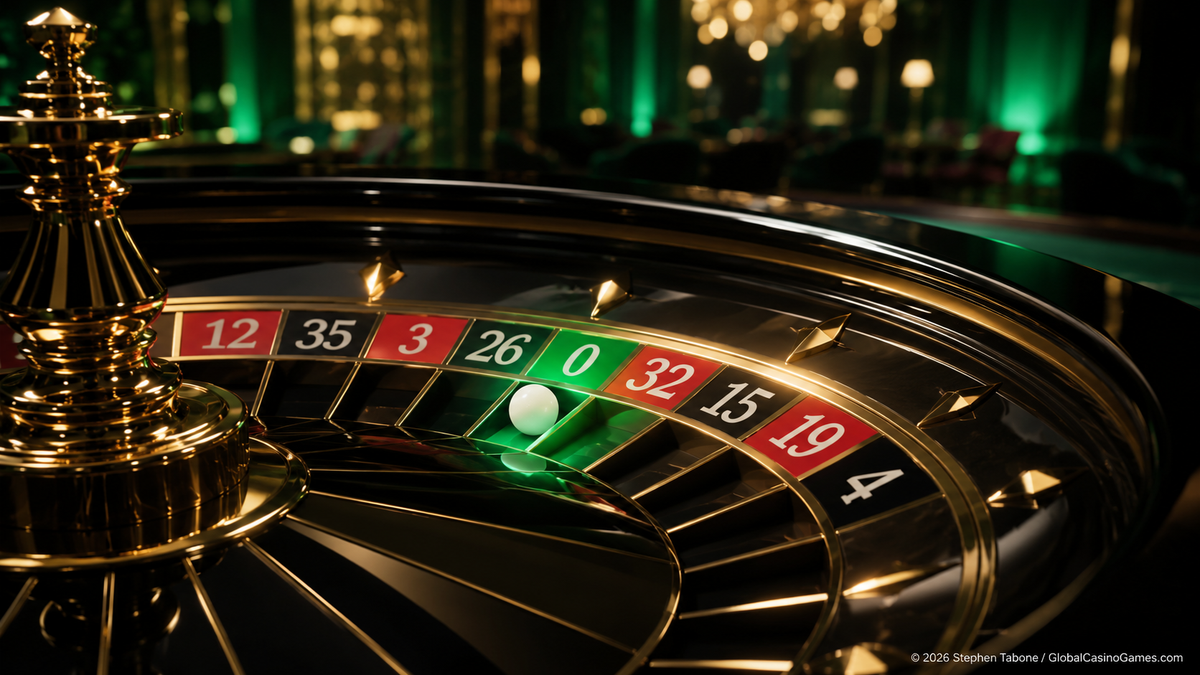
The green zero is the roulette pocket marked 0. It sits away from the red and black numbered pockets, which is why it catches the eye on both the wheel and the betting layout.
Standard European roulette has one green zero. Standard American roulette has 0 and 00. Triple-zero roulette is a high-edge U.S.-market style variant with three green-style results, usually shown as 0, 00 and 000.
Some newer electronic and bonus-style formats add even more zero or bonus spaces. Whatever the design looks like, the first question is always the same: how many extra pockets sit outside the numbers 1 to 36?
Zero matters because it is outside the normal 1 to 36 number sequence. It is not red, black, odd, even, low or high. That changes the true odds, the expected return, and the long-term payout relationship between player and casino.
Why Does Roulette Have a Green Zero?
Roulette has a green zero because the casino needs a built-in edge. The wheel may look balanced at first glance, but zero is the pocket that stops most standard bets from being paid at their true mathematical odds.
A straight-up roulette number pays 35 to 1. That payout would fit better on a wheel with only 36 outcomes. But roulette does not have only 36 outcomes. A single-zero wheel has 37 pockets. A double-zero wheel has 38. A triple-zero wheel has 39.
The payout does not rise to match the zero pocket, nor the extra zero pockets added on double-zero and triple-zero wheels.
The house edge is not literally a tax, but it behaves like a passive long-term tax on collective player wagers. A player may not notice it on one spin. Across thousands of spins, it quietly helps the casino keep a fixed percentage of the money staked.
Is Green Zero Odd or Even in Roulette?
No. Green zero is neither odd nor even.
This question comes up because the betting layout looks balanced. There are 18 odd numbers and 18 even numbers, so Odd and Even look like clean two-way bets. Zero does not belong to either side.
If you bet Odd and the ball lands on zero, you lose. If you bet Even and zero lands, you also lose. Zero sits outside the Odd and Even betting options.
Does 0 Count as Black or Red for Outside Bets?
Zero does not count as black or red. It is green.
This is why red and black bets are not true 50/50 bets. On a European wheel, Red wins on 18 of 37 outcomes. Black also wins on 18 of 37 outcomes. The remaining outcome is zero.
On an American wheel, Red wins on 18 of 38 outcomes. Black also wins on 18 of 38 outcomes. The remaining outcomes are 0 and 00.
That is where the green pocket starts doing its work. It turns a bet that feels like a coin toss into a casino-favoured wager.
Is Roulette Zero Considered Low or High?
No. Zero is not low and it is not high.
The Low bet covers 1 to 18. The High bet covers 19 to 36. Zero sits outside both ranges, so it does not help either side.
If you bet Low and the ball lands on zero, the bet loses. If you bet High and zero lands, that bet loses too. Zero is the third result hiding behind a bet that feels like a simple two-way choice.
What Happens If Roulette Lands on Green?
When roulette lands on green, the winning result is zero, double zero, triple zero, or another green-style pocket used by that wheel.
A straight-up bet on the exact green pocket wins. Bets that do not include that pocket lose, unless an even money outside bet is protected by a half-back rule.
The practical question is simple: did your bet include the green pocket the ball landed in?
If the answer is no, the bet loses unless the table rules give protection through La Partage, En Prison or a Surrender-style half-back rule.
Even Money Outside Bets
The six even money outside bets are Red, Black, Odd, Even, Low and High. They pay 1 to 1 and look simple because each one covers 18 numbers.
Zero is not included in any of those betting options. If you bet Red and zero lands, you lose. If you bet Even and zero lands, you lose. If you bet Low and zero lands, you lose.
A half-back rule can soften that result, but only where the table rules say so. That is why even money bets behave differently on a La Partage table.
Dozens and Columns
Dozens and columns are outside bets, but they are not even money bets. They pay 2 to 1, not 1 to 1.
The dozens cover 1 to 12, 13 to 24, and 25 to 36.
Columns are the three 12-number betting lines on the layout. They are called columns in roulette, although from the player’s side of the table they may look like long horizontal rows running towards the zero end of the layout.
If zero lands while you are betting a dozen or column, the full stake is lost under standard rules. That is why dozens and columns should not be mixed up with Red, Black, Odd, Even, Low and High. They do not receive La Partage protection unless a special published rule says otherwise.
How Does the Green Zero Create the House Edge?
The green zero creates the house edge by adding an extra outcome without increasing the standard payout.
Take a straight-up number bet. It pays 35 to 1. That sounds like a 36-outcome price because there are 36 numbered pockets from 1 to 36. But a single-zero wheel has 37 pockets. You can win on one pocket and lose on 36.
The payout is slightly short of the true odds. That difference between payout odds and actual probability is the casino’s edge.
Roulette House Edge Table
|
Wheel type |
Total pockets |
Green-style pockets |
Chance of any green result |
Standard house edge |
|
Single-zero roulette |
37 |
1 |
1 in 37, or 2.70% |
2.70% |
|
Double-zero roulette |
38 |
2 |
2 in 38, or 5.26% |
5.26% |
|
Triple-zero roulette |
39 |
3 |
3 in 39, or 7.69% |
7.69% |
|
Four-zero roulette |
40 |
4 |
4 in 40, or 10.00% |
10.00% |
The Official Sources I Use for Roulette House Edge
When I check roulette house edge, I start with the wheel count before looking at any betting system.
Official New Jersey gaming rules define a single-zero roulette wheel as having 37 equally spaced compartments, including one green zero. The same official rules define a double-zero wheel as having 38 compartments, including green 0 and green 00.
That matters because a straight-up roulette bet still pays 35 to 1. On a single-zero wheel, the chance of hitting one exact pocket is 1 in 37. On a double-zero wheel, it is 1 in 38.
The house edge is fixed at a higher value when extra zero pockets are built into the wheel. The payout structure does not improve enough to compensate the player for those extra outcomes.
The UK Gambling Commission explains that RTP is an average measured over a significant number of game plays, not a prediction for one playing session. It also describes house edge as the percentage a casino expects to keep, on average, from each hand or spin.
That is the right way to read roulette maths. It is a long-term expected return calculation, not a forecast of the next spin.
For triple-zero roulette, Nevada Gaming Control Board approved-game materials include a Huxley Triple-Zero format with a 39-pocket wheel containing numbers 1 to 36 plus 0, 00 and 000.
For any four-zero or bonus-style wheel, I treat the maths as table-specific. If the wheel has 40 equally likely pockets and four green-style spaces, the standard zero-count calculation is 4 divided by 40, or 10%. But the final answer always depends on the actual game rules and payout table.
Roulette House Edge Calculator
Use the calculator below to see how the number of green pockets changes the long-term cost of roulette.
Choose whether the wheel has 1, 2, 3 or 4 green-style pockets. The calculator will show the house edge and the expected long-term loss per £100 staked.
This is not a prediction of what will happen on your next spin. Roulette results are random in the short term. The calculator simply shows the mathematical price of each wheel type over time.
House Edge Single Zero vs Double Zero
The difference between single zero and double zero is one of the biggest roulette decisions.
A single-zero wheel has 37 pockets and a standard house edge of 2.70%. A double zero roulette wheel has 38 pockets and a standard house edge of 5.26%.
That second green pocket nearly doubles the casino’s mathematical advantage. On standard maths, European roulette is better for players than American roulette because there is one fewer pocket outside numbers 1 to 36.
The game may look similar, but the extra green pocket lowers the chance that any chosen single number, split, street, corner, dozen, column or outside bet will win on that spin.
You Are at a Vegas Table and the Ball Hits 00
If you bet directly on 00, you win.
If you bet Red, Black, Odd, Even, Low or High, you lose unless the table has a Surrender or half-back rule.
If you bet a dozen or column, you lose. Dozens and columns do not include 0 or 00.
The only layout bets around 0 and 00 are the special zero-area bets, such as straight-up 0, straight-up 00, splits including 0 or 00, trios such as 0/1/2 and 00/2/3, and the five-number bet covering 0, 00, 1, 2 and 3.
The double-zero pocket is not more powerful than the single zero. The problem is that American roulette has both 0 and 00.
Two green pockets mean more ways for outside bets to fail. They also reduce the chance of hitting any chosen single number because the wheel has 38 pockets instead of 37.
What Is the House Edge on a Triple-Zero Roulette Wheel?
The standard triple-zero roulette house edge percentage is 7.69%.
That makes the game far more taxing on a player’s bankroll than single-zero roulette. The reason is simple: the wheel has three green-style results, but the standard payout structure does not improve enough to compensate the player.
Triple-zero wheels may offer lower minimum bets or a louder casino-floor experience. That does not change the maths.
If you see a triple-zero wheel and care about value, walk away and look for a single-zero European layout instead.
Are There Four-Zero Roulette Wheels Now?
Yes. Four-zero roulette exists in some newer electronic, novelty and bonus-style formats.
A standard four-zero structure has 40 pockets. Under normal roulette payout logic, that creates a 10% house edge. That is a long way from classic European roulette.
Some games may use bonus symbols, gem spaces, multiplier pockets or special layouts instead of simply showing 0000. The surface design can change, but the first question stays the same.
How many extra pockets sit outside the 36 main numbers?
Those green-style or bonus pockets are not losing pockets in every situation. A bet that includes one of them can win. The problem is their presence. Compared with single-zero roulette, extra pockets give the casino more long-term winning outcomes against most standard wagers.
What Are the Odds of Hitting Green in Roulette?
The odds of hitting green depend on the number of green-style pockets.
On a single-zero wheel, the chance of hitting green is 1 in 37, or 2.70%.
On a double-zero wheel, the chance of any green result is 2 in 38, or 5.26%. The chance of one specific green pocket, such as 0 or 00, is 1 in 38, or 2.63%.
On a triple-zero wheel, the chance of any green result is 3 in 39, or 7.69%. The chance of one specific green pocket, such as 0, 00 or 000, is 1 in 39, or 2.56%.
On a four-zero wheel, the chance of any green-style result is 4 in 40, or 10.00%. The chance of one specific green-style pocket is 1 in 40, or 2.50%.
These are probabilities, not predictions. A green result can appear twice in a few spins or disappear for a long stretch. The wheel does not balance history.
What Do You Get If You Bet on Green in Roulette?
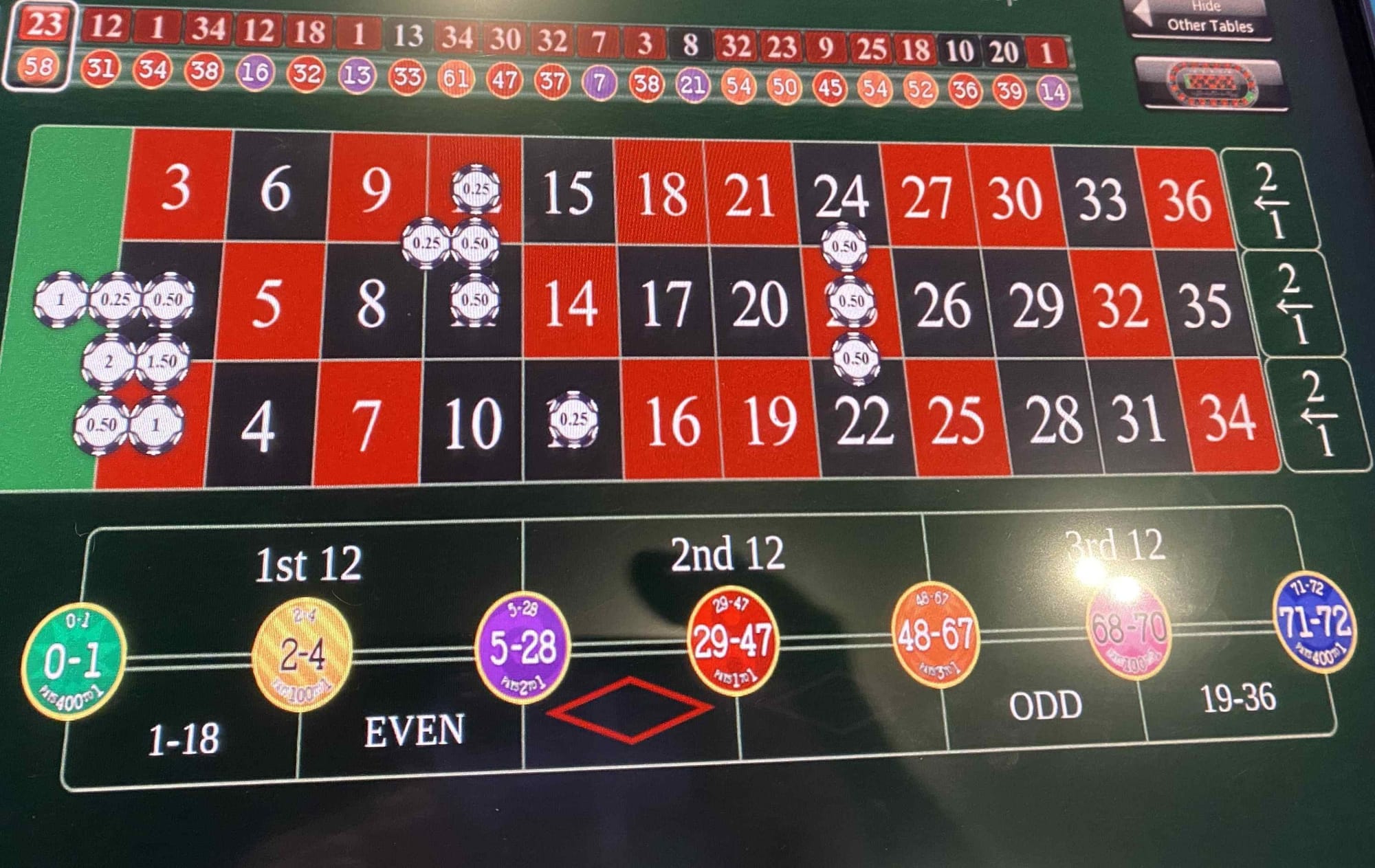
A straight-up bet on green zero pays 35 to 1 under standard roulette payouts.
That is the same payout as a straight-up bet on any other single number. Green does not pay more because it is green.
This is where many players get the wrong impression. The colour stands out, so the bet feels special. But the payout is not special.
The green pocket matters because of what it does to the game’s maths, not because it pays a premium.
Does Green 0 Pay More Than a Regular Number?
No. Green 0 has the same standard straight-up payout as a regular number.
A straight-up bet on 0 pays 35 to 1. A straight-up bet on 17 also pays 35 to 1. The same applies to 21, 5, 32 or any other single number.
The wheel is colour-coded for layout and clarity. It does not mean the green pocket has a better payout. Attention is not the same as value.
What Are the Exact Payout Odds for Double Zero?
A straight-up bet on 00 pays 35 to 1 under standard American roulette payouts.
A split bet covering 0 and 00 pays 17 to 1.
That can look confusing at first. A £1 split bet on 0 and 00 returns £18 in total if either green pocket lands: £17 profit plus the £1 stake back.
That is the same total return as placing 50p straight-up on 0 and 50p straight-up on 00. If one of them wins, the winning 50p pays £17.50 profit and returns the 50p stake, while the other 50p loses. The total returned is still £18.
The split is not worse than backing both green numbers separately. It is simply the table’s way of letting one chip cover two pockets.
The house edge remains because the American wheel has 38 pockets. A fair 0/00 split on a 38-pocket wheel would pay 18 to 1, but the standard roulette payout is 17 to 1.
What Is the Roulette Basket Bet Payout?
The basket bet, also called the top-line or first-five bet, covers 0, 00, 1, 2 and 3 on a standard American roulette layout.
It pays 6 to 1. This bet looks attractive because it covers both green pockets and three nearby numbers.
But it is not a strong-value bet. The payout is not generous enough for the coverage. That makes the basket bet worse than most standard American roulette bets.
Do not treat the basket bet as a smart green hedge. It is a convenience bet with a higher price.
Does Zero Hurt Outside Bets More Than Inside Number Bets?
This is the deeper point many roulette guides miss.
Zero creates the house edge across standard roulette payouts. But players feel that edge differently depending on the bet type.
With Red, Black, Odd, Even, Low and High, zero feels like a third result that breaks the apparent two-way choice. You did not choose red. You did not choose black. Yet you still lost.
With dozens and columns, zero can be even harsher. These bets lose in full when zero lands under standard rules.
Why the Wheel Is Colourblind
The wheel does not care about colour. The ball does not know red, black or green. It only lands in a pocket.
Suppose you bet five inside numbers: 17, 3, 21, 31 and 5. If zero lands, you did not lose because the green colour attacked your bet. You lost because none of your selected pockets landed.
This is the point I want readers to understand at a deeper level.
When you play inside numbers, the house edge is not caused by green being magical. The edge comes from the payout versus the number of pockets on the wheel. Zero happens to be the extra pocket on a single-zero wheel, but the mathematical issue is the 37-pocket layout paying a 35 to 1 straight-up return.
With even money outside bets, zero works differently in the player’s mind. It breaks Red/Black, Odd/Even and Low/High because those bets look like two-sided choices. With La Partage, zero may only cost half the stake. Without La Partage, zero takes the full stake.
That distinction is why I am writing this guide on Global Casino Games. General roulette articles often call zero the “house edge pocket” and stop there. I think the better way to study roulette is to separate the role zero plays on outside bets from the role it plays on inside number bets.
That is where the real learning starts.
How Much Does the Single Zero Edge Change With La Partage?
La Partage can reduce the house edge on qualifying single-zero even money bets from 2.70% to 1.35%.
The rule is simple. If you place an even money bet on Red, Black, Odd, Even, Low or High, and zero lands, you lose only half the stake. The other half is returned.
This is why La Partage matters. It directly reduces the damage caused by zero on the outside bets that pay 1 to 1.
La Partage does not apply to dozens, columns or inside bets under standard rules. Those bets lose in full when zero lands unless a special published rule says otherwise.
What Is the Difference Between La Partage and En Prison?
La Partage gives half the qualifying stake back immediately when zero lands.
En Prison leaves the stake locked for the next spin. If the next result wins, the stake is released. If it loses, the stake is lost under the standard version of the rule.
In modern online roulette, La Partage is often clearer and more automatic. En Prison is more old-fashioned and more associated with traditional French roulette.
Do not assume either rule applies. Always check the table rules first.
Does the Surrender Rule Cover Double Zero?
Sometimes, but do not assume it.
Some American or Atlantic City-style roulette rules can include a Surrender option. This may return half the stake on certain even-money bets when 0 or 00 lands.
But rules vary by casino, jurisdiction, software provider and roulette version. One double-zero table may offer a half-back rule. Another may not.
The safe approach is simple: check the rules panel before betting. If the half-back rule is not clearly shown, assume it is not in use.
How I Choose a Roulette Table Before I Bet
When I want to play roulette, the first thing I look for is a single-zero wheel.
That matters even if I intend to play inside bets, such as straight-up numbers, splits or small clusters. I might start with numbers, then pivot during the session and place an even money bet on Red, Black, Odd, Even, Low or High.
If that happens, I want to know where I stand before the croupier spins the ball.
A single-zero table is already better than a double-zero table because there is only one green pocket. But I still check whether the half-back rule applies.
If zero lands and I have not covered zero, I want to know whether I lose the full outside bet or get half the stake back. That is why La Partage matters.
Online Roulette and Online Live Roulette Rules Can Vary
I do not assume every roulette table plays the same.
One online roulette lobby can contain several versions of the game. One online live roulette provider can offer European roulette, French roulette, American roulette, multiplier roulette and special-rule variants side by side.
The name of the game is not enough. Check the rules panel before betting.
If I am playing outside bets, I want to know three things before the first stake goes down.
- Is it single zero, double zero, triple zero or something worse?
- Does La Partage, En Prison or Surrender apply?
- Does the half-back rule cover only Red, Black, Odd, Even, Low and High?
Dozens and columns are different. They pay 2 to 1 and do not get half-back protection under standard rules. If zero lands, those bets lose in full.
That is the practical reason I prefer single-zero roulette with a clear half-back rule. It gives me the cleanest version of the game if I move from inside numbers to outside betting during a session.
Should You Cover Green, or Is That the Green Hedge Fallacy?
Covering green means placing a small chip on zero while betting something else.
A player might bet Red, then add a chip on zero. The idea is simple. If the ball lands in the green zero, the zero bet softens the loss on the Red bet.
That can reduce the pain of one result. But this is the green hedge fallacy.
You are not removing the house edge. You are adding another repeating cost. If the ball does not land in green, the cover chip loses again and again. Over time, those small chips can become a second leak in the bankroll.
A green hedge can be a short-term preference. It is not a system. It does not turn roulette into a beatable game.
Reader note: Covering green can reduce the pain of one zero result, but it does not remove the house edge. Never chase roulette losses or increase stakes because zero feels due. If gambling stops feeling controlled, use deposit limits, time-outs or self-exclusion tools, and seek free support from GamCare or BeGambleAware.
Your Martingale Hits Zero
A Martingale strategy uses Red, Black, Odd, Even, Low or High.
Zero is a problem because it creates a losing result outside the two chosen sides. On a table without La Partage, zero takes the whole stake.
With La Partage, zero may only cost half the stake. That helps, but it does not beat the game.
The main dangers remain table limits, bankroll limits and long losing sequences. A Martingale can make small wins feel regular. It does not change the underlying roulette odds.
For a deeper data-led example, see my 10,000-spin roulette strategy test, where I compare Martingale, Paroli and flat betting on a European single-zero wheel. It shows how zero, non-red runs, table limits and rising stake pressure can affect even money betting over a longer sequence.
If I Bet on Every Number Including Green, Do I Win Money?
No. Betting on every number does not create profit.
If you cover every pocket on a single-zero wheel, one bet will win. But the payout will not cover the total amount staked.
The same logic applies to double-zero, triple-zero and four-zero wheels. Covering more numbers increases hit frequency. It also increases total stake.
Roulette is not beaten by covering everything. The paytable still gives the casino the edge.
What Is the Gambler’s Fallacy Applied to Zero?
The gambler’s fallacy is the belief that past spins control future spins.
With zero, it often appears in two ways. Some players think zero is due because it has not appeared for a long time. Others think zero cannot appear again because it has just landed.
Both ideas are wrong on a fair roulette game.
Each spin is independent. The wheel does not remember past outcomes, and the ball does not owe the table a correction.
Players should avoid becoming fixated on zero, or on any single number. Every pocket has its own chance of being hit on the next spin. Sometimes a result is just luck, random timing, or a short-term streak that feels more meaningful than it is.
What Is a Roulette Green Pocket Strategy That Makes Sense?
A sensible roulette green pocket strategy starts with table selection.
Choose single-zero roulette over double-zero where possible. Prefer La Partage if you mainly play outside bets. Be careful with triple-zero and four-zero games.
Do not treat zero as lucky, cursed or overdue. It is a pocket, not a signal from the wheel.
My view is simple. The green zero is one of the best ways to teach roulette honestly because it exposes the house edge, the weakness of outside chances, and the danger of emotional betting.
The Green Zero as a Visual Timing Marker
On physical wheels and some online live roulette tables, the green zero can also act as a visual marker.
Because it stands out from the red and black pockets, it can help experienced observers track wheel rotation and ball speed.
That does not mean zero is lucky. It means the colour can make the pocket easier to notice.
I have written about roulette systems, probability and table-game structure for years. In my view, the green zero is most useful when it helps players understand the game more clearly.
You can find a full list of my books and casino-game guides on my author profile.
Best Roulette Tables for Lower House Edge
The best roulette table is the one with the fewest zero pockets and the clearest player-friendly rules.
For most players, the order is clear. French or European roulette with La Partage is strongest for bets that pay 1 to 1. Single-zero European roulette is better than American roulette on standard maths.
Double-zero roulette is weaker because of the second green pocket. Triple-zero and four-zero games are much more taxing on the bankroll over time.
At Global Casino Games, I would start every roulette review with one question: how many green-style pockets does the game have?
That question tells you more than most betting systems.
What to Remember Before You Play
The green zero is not magic. It is not lucky. It is not evil. It is the mathematical difference between a fair-looking wheel and a casino game with a built-in edge.
For Red, Black, Odd, Even, Low and High, zero matters because it breaks the apparent two-way choice. For dozens and columns, it can be worse because the full stake is lost under standard rules.
For inside number bets, zero should be viewed more calmly. It is another pocket that can land when your chosen numbers do not.
The smarter approach is not to obsess over green. It is to understand what green changes.
Before you play, check the zero count, the paytable and the half-back rule. If the table has extra green spaces and no player-friendly rule, look for a better roulette game.
| Wheel Variant | Total Pockets | Green Spaces | House Edge | Loss per £100 |
|---|---|---|---|---|
| French (La Partage) | 37 | 1 | 1.35% | £1.35 |
| European (Single-Zero) | 37 | 1 | 2.70% | £2.70 |
| American (Double-Zero) | 38 | 2 | 5.26% | £5.26 |
| Triple-Zero (Sands) | 39 | 3 | 7.69% | £7.69 |
| Four-Zero (Novelty) | 40 | 4 | 10.00% | £10.00 |
Global Casino Games FAQs on the Green Zero in Roulette
Why is zero coloured green in roulette?
Zero is coloured green so players can separate it from the red and black number pockets. It makes clear that zero does not belong to the red or black, odd or even, or low or high betting options.
The colour is visual. The mathematical effect comes from the extra pocket and the unchanged payout structure.
Is betting on zero better than betting on another number?
No. A straight-up zero bet has the same standard payout and house edge as any other single number bet on the same wheel.
Zero may feel more noticeable because it is green, but it is not more likely to land than another single pocket.
What happens to a column or dozen bet when zero lands?
A dozen or column bet loses in full when zero lands under standard rules.
That is different from some French or European tables where Red, Black, Odd, Even, Low and High may receive half-back protection under La Partage.
Dozens and columns do not get that protection unless a special published rule says otherwise.
Can covering green protect my roulette session?
Covering green can reduce the pain of one zero result, but it adds another recurring bet.
If zero does not land, the cover bet keeps losing. That is why green hedging should be treated as a cost, not a strategy that defeats the house edge.
Which roulette game should I avoid if I care about odds?
Avoid double-zero roulette when a single-zero table is available. Avoid triple-zero and four-zero games even more strongly if your priority is value.
Those games may be entertaining, but the house edge is much higher than single-zero roulette. A single-zero table, especially with La Partage, is the better mathematical choice.